A ransomware event rarely starts in the server room. More often, it starts on a laptop, a mobile phone, or a user account tied to a device that looked routine until it became the entry point. That is why business leaders keep asking what is an endpoint in cyber security, and why it matters so much to day-to-day operations.
In plain terms, an endpoint is any device that connects to your business network or cloud environment and can send, receive, or store data. That includes company laptops, desktops, smartphones, tablets, servers, and even some printers or specialized devices. If a device gives a user access to email, files, apps, or internal systems, it is usually an endpoint.
That sounds simple, but the business impact is where this gets serious. Endpoints are where people work. They are also where attackers often gain their first foothold.
What is an endpoint in cyber security?
In cyber security, an endpoint is the end-user device or connected system that interacts with a network. Think of it as the edge of your IT environment where users, data, and applications meet. It is not just a piece of hardware. It is also a control point that needs monitoring, patching, policy enforcement, and threat protection.
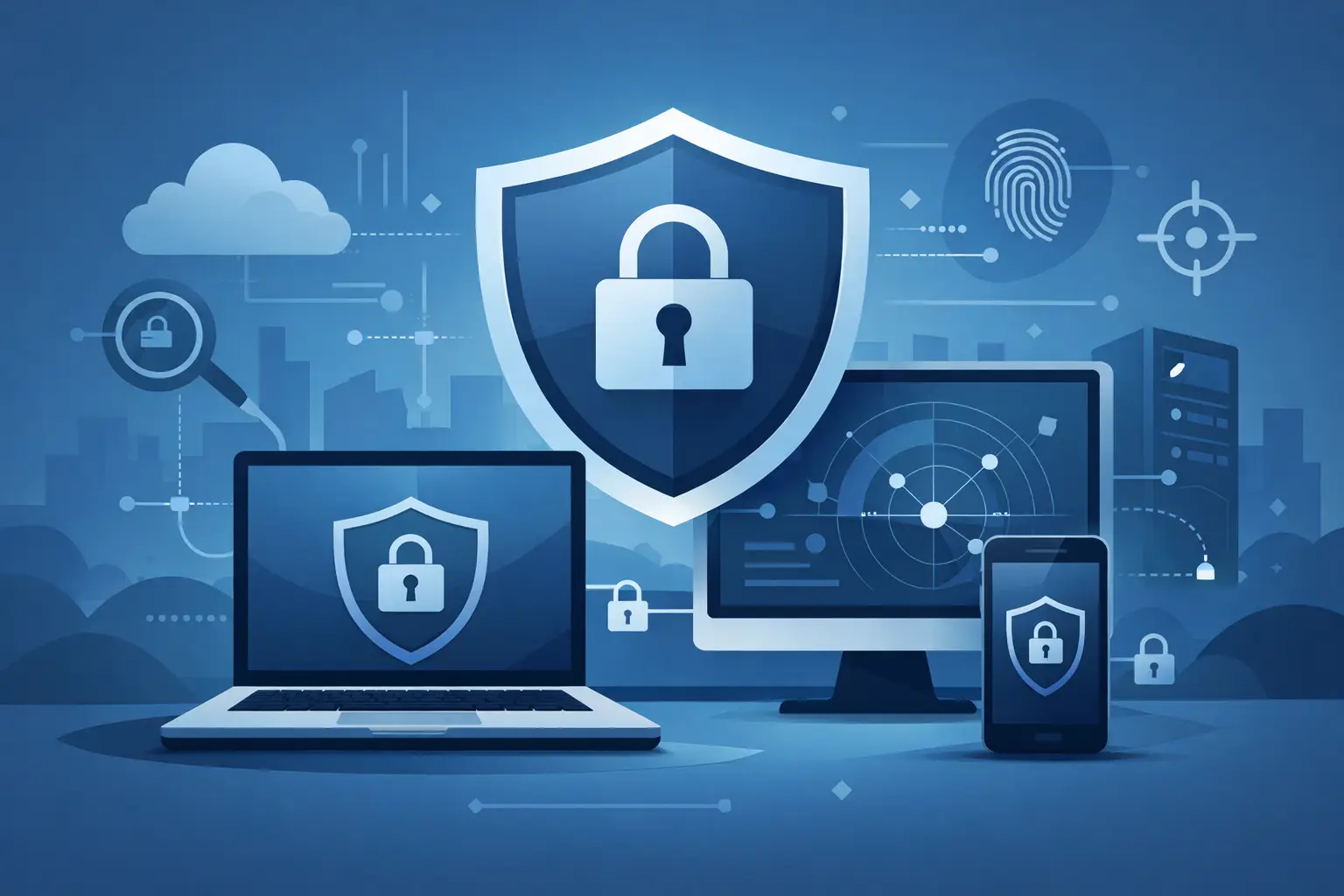
For a small or mid-sized business, endpoints usually include employee workstations, company-issued laptops, mobile devices, virtual desktops, and servers. In some environments, endpoints may also include point-of-sale systems, warehouse scanners, conference room systems, and devices used by remote or field staff.
The exact list depends on how your business operates. A law firm may focus heavily on laptops and mobile phones. A manufacturer may have floor systems and shared terminals. A multi-site office may have a mix of desktops, mobile devices, and cloud-managed endpoints spread across locations.
Why endpoints matter so much
Endpoints matter because they are exposed. Users open email, download files, log in to cloud apps, connect to Wi-Fi, and move between office and remote locations. Every one of those actions creates opportunity for productivity and risk at the same time.
If one endpoint is compromised, the issue may not stay contained. Attackers can use a single infected laptop to steal credentials, move laterally, access Microsoft 365, encrypt shared files, or disrupt business operations. What begins as one device problem can quickly become a company-wide incident.
This is why endpoint security is not just an antivirus conversation. It is an operational discipline. Businesses that depend on uptime need to know which devices are in use, whether they are patched, whether protection is active, and whether unusual behavior is being detected early.
Common examples of endpoints
Most businesses already manage more endpoints than they think. The obvious examples are desktops and laptops, but the list often expands once cloud services, remote work, and mobile access are part of daily operations.
A company laptop used for Microsoft 365 is an endpoint. So is an employee smartphone that accesses email and Teams. A front-desk workstation, a remote sales laptop, a file server, and a tablet used in the field all qualify. In many environments, even shared devices in conference rooms or branch offices should be treated as endpoints if they connect to business systems.
The key point is this: if the device connects to company data or services, it belongs in your security scope.
Endpoint vs network: what is the difference?
This is where confusion often starts. The network is the infrastructure that connects systems. Endpoints are the devices using that infrastructure.
A firewall protects traffic entering and leaving the network. An endpoint protection platform helps secure the device itself. Both matter, but they solve different problems. A firewall may block suspicious traffic, while endpoint controls can detect malware, stop a malicious process, enforce encryption, or isolate an infected laptop from the rest of the environment.
For businesses that rely on cloud platforms, the difference matters even more. Many users now work outside the office network, but their devices still access company email, files, and applications. That means endpoint security remains essential even when traditional network boundaries are less defined.
What makes endpoints vulnerable
Endpoints are vulnerable because they are used constantly, often by busy employees making fast decisions. Security issues usually come from a mix of technical gaps and normal human behavior.
Common examples include delayed patching, weak passwords, reused credentials, unapproved software, phishing clicks, and devices that are missing protection or monitoring. Remote work adds more variables, especially when users connect through home networks or travel with devices that may not be updated regularly.
There is also a visibility problem. Many organizations know their servers well but have less control over every laptop, mobile device, and remote endpoint in active use. When devices are not standardized, monitored, or centrally managed, risk grows quietly.
What endpoint security actually includes
When people hear endpoint security, they sometimes think only of antivirus. Modern endpoint security is broader than that.
At a minimum, businesses should have malware protection, operating system and application patching, device monitoring, encryption, access controls, and the ability to respond if a device is compromised. In more mature environments, endpoint protection may also include endpoint detection and response, application control, device compliance policies, and integration with Microsoft 365 security tools.
This is where proactive management matters. A security tool by itself is not enough if alerts are ignored, patches are delayed, or exceptions pile up without review. Protection works best when devices are part of a managed process with clear ownership.
What is an endpoint in cyber security from an operations view?
From an operations standpoint, an endpoint is not just a device to protect. It is a device to account for, maintain, and support. That distinction matters for business continuity.
A properly managed endpoint should have a known owner, a standard configuration, approved software, active security controls, backup considerations where relevant, and a support path if something goes wrong. It should also be visible to IT teams through monitoring and reporting.
This is why mature organizations treat endpoint management and endpoint security as connected functions. If devices are not patched, inventoried, and consistently administered, security gaps are almost guaranteed. Stable operations and strong security are tied together at the endpoint level.
The trade-offs businesses should understand
There is no single endpoint strategy that fits every company. It depends on your size, industry, compliance requirements, remote workforce model, and tolerance for risk.
Tighter controls usually improve security, but they can also limit user flexibility. For example, blocking unauthorized software reduces risk, yet some teams may need exceptions for specialty tools. Requiring stricter device compliance improves control, but it may affect how quickly users can onboard or work from personal devices.
That is why endpoint security should be designed around business priorities, not added as a disconnected set of tools. The goal is controlled productivity, not friction for its own sake.
What good endpoint management looks like
Good endpoint management starts with knowing what devices exist and who is using them. From there, businesses need standard deployment, regular patching, active protection, user access controls, and continuous monitoring.
It also means having a response plan. If a laptop shows signs of compromise, can it be isolated quickly? If a user reports suspicious activity, is there a clear escalation path? If a device is lost, can access be revoked and the device wiped if needed?
Organizations that operate this way reduce downtime and reduce the chance that one device issue turns into a major security event. That is the practical value of managed endpoint oversight.
For companies that do not have internal resources to stay on top of these tasks, a managed provider can bring structure to the process. One Source Datacom, for example, approaches endpoint security as part of a broader managed environment that includes monitoring, patching, support, and response so device risk is not handled in isolation.
Why this matters to business leaders
If you are responsible for operations, finance, compliance, or overall business continuity, endpoints deserve attention because they sit at the intersection of user productivity and security exposure. They are where employees work, where credentials are used, and where small failures often become expensive problems.
A neglected endpoint can lead to downtime, data loss, regulatory issues, or recovery costs that far exceed the effort required to manage devices properly in the first place. A well-managed endpoint environment supports faster support, stronger policy enforcement, and clearer accountability across the business.
That is the real answer to the question. An endpoint in cyber security is any connected device that can access your systems and data, but in practical terms, it is also one of the most important places to maintain control. If you want fewer surprises, fewer interruptions, and a stronger security posture, start with the devices your business depends on every day.