
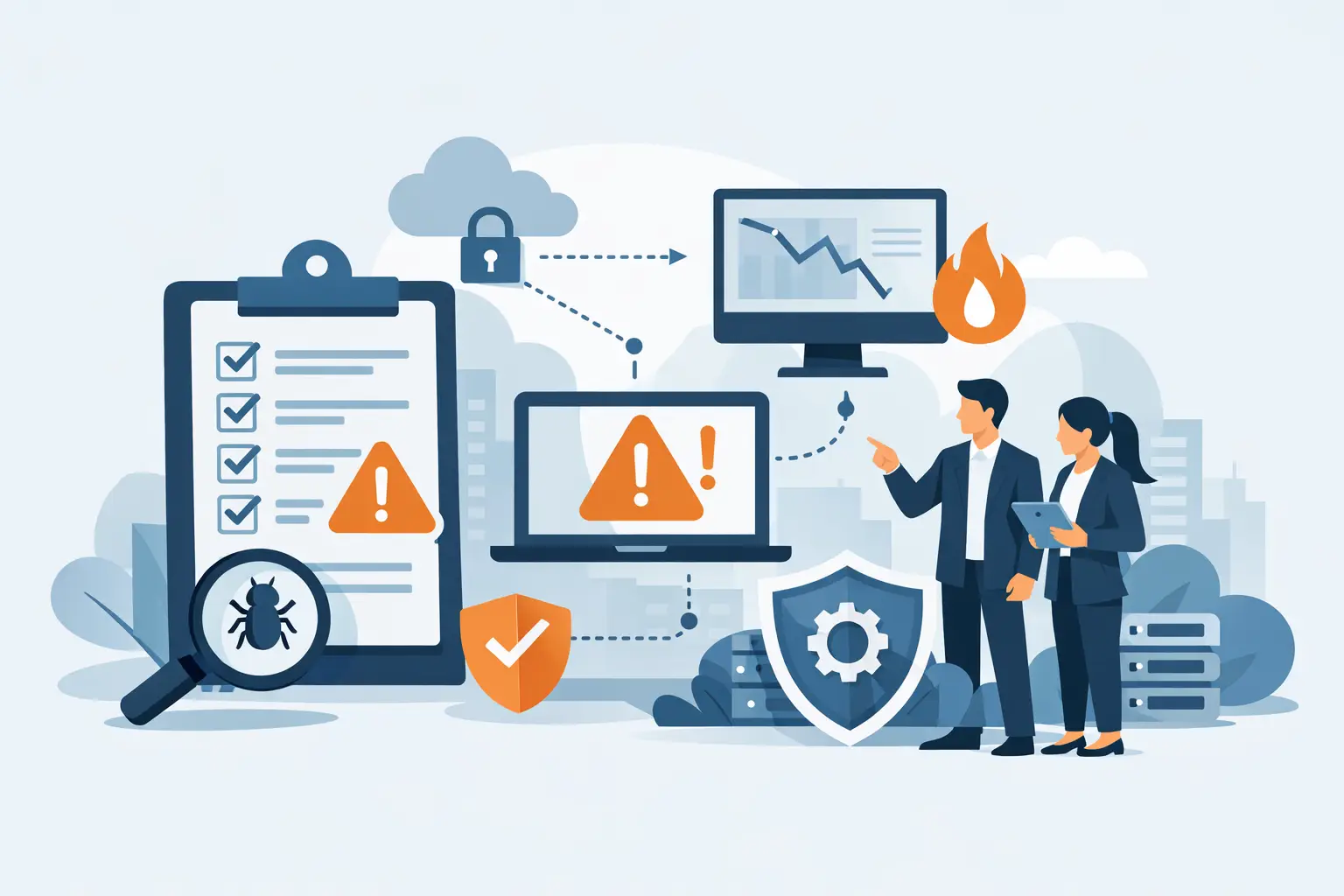
A ransomware alert at 9:12 a.m. is not the time to decide who owns containment, who contacts leadership, or whether backups are actually usable. That is exactly why businesses ask what is incident response plan and why it matters. An incident response plan is the documented process your organization follows to detect, contain, investigate, communicate, and recover from a cybersecurity incident or major IT security event.
For companies that rely on Microsoft 365, cloud applications, endpoints, servers, and remote access every day, the real value is not paperwork. It is operational control. A good plan reduces confusion, shortens downtime, protects evidence, and gives decision-makers a clear path forward when the pressure is highest.
What is incident response plan in practical terms?
In practical terms, an incident response plan is a playbook for handling security incidents before they spread into larger business disruptions. It defines roles, escalation paths, communication steps, technical actions, and recovery priorities. It should tell your team what to do when suspicious login activity appears, when an endpoint is infected, when a user reports a phishing click, or when critical systems start behaving abnormally.
Many organizations assume incident response starts when something goes wrong. In reality, the plan is built well before that moment. It aligns IT, security, leadership, legal, and operations around a shared response process so the business does not lose time debating next steps during an active event.
That matters because incidents rarely stay confined to one system. A compromised account can lead to email fraud. A phishing click can trigger malware. An unpatched server can become a foothold for lateral movement. Without a plan, teams often react in fragments. With a plan, they act in sequence.
What an incident response plan usually includes
A useful plan is specific enough to guide action but flexible enough to fit different incident types. Most include the same core components.
First, there is incident classification. Not every alert is a crisis, and not every security event deserves the same response. The plan should define what qualifies as an incident, how severity is assigned, and when escalation is mandatory.
Second, there are roles and responsibilities. Someone needs authority to isolate systems, someone needs to lead technical investigation, and someone needs to manage internal and external communications. If those responsibilities are unclear, response slows down immediately.
Third, there are containment and recovery procedures. These can include disabling accounts, isolating endpoints, blocking malicious IPs, restoring backups, enforcing password resets, or increasing monitoring on affected systems. The right response depends on the environment and the type of threat, which is why a plan should reflect the actual systems the business uses.
Fourth, there is communication. Leadership needs timely updates. Employees may need instructions. In some cases, customers, insurers, regulators, or legal counsel may need to be informed. A plan should define who approves messaging and what thresholds trigger notification.
Finally, there is documentation and review. Every incident should leave a record of what happened, what was done, what worked, and what needs improvement. That review is where stronger controls, better training, and tighter response processes are built.
Why businesses need more than a generic template
A generic template can be a starting point, but it is not enough for a business that depends on uptime and predictable operations. An incident response plan needs to match the environment it is meant to protect.
A company with multiple locations, cloud file storage, remote staff, and Microsoft 365 has different risks than a single-site office with on-premises systems. The same is true for businesses with compliance obligations, third-party vendors, or line-of-business applications that cannot tolerate extended downtime.
This is where many plans fail. They look complete on paper, but they do not reflect how the business actually operates. Contacts are outdated, escalation paths are unclear, backup recovery assumptions are untested, and the internal team is unsure when to involve outside support. During a live incident, those gaps become expensive.
An effective plan connects security response to business continuity. It answers practical questions such as which systems are most critical, how long they can be down, who must approve major actions, and what outside partners should be engaged. That structure gives leaders more than technical guidance. It gives them decision support.
The lifecycle of a strong incident response process
Most incident response plans follow a standard lifecycle, even if the terminology varies slightly.
Preparation comes first. This includes asset visibility, access controls, endpoint protection, logging, patching, backup validation, and documented procedures. Preparation is where the business builds the conditions for a faster response.
Detection and analysis come next. This is the stage where alerts are reviewed, suspicious activity is validated, and the scope of the issue starts to take shape. Speed matters here, but so does accuracy. Overreacting to a false positive wastes time. Underreacting to real malicious activity gives an attacker room to expand.
Containment follows. The immediate goal is to stop the damage from spreading. Depending on the incident, that might mean isolating a device, disabling accounts, blocking network traffic, or limiting access to key systems.
Eradication and recovery happen after that. The threat is removed, affected systems are cleaned or rebuilt, credentials are reset, and business operations are restored in a controlled way. Recovery should include validation. Restoring a system without confirming the threat is gone can create a second outage.
The final phase is lessons learned. This is where teams review root cause, response time, communication effectiveness, and control gaps. It is also where mature organizations make measurable improvements instead of treating every incident as a one-time event.
Common mistakes that weaken incident response
The biggest mistake is assuming your IT team can figure it out in the moment. Skilled people still need structure. Without one, too much time is lost on coordination.
Another common issue is separating security response from day-to-day IT operations. In practice, incidents affect users, devices, email, cloud access, backups, and business applications at the same time. If support, infrastructure, and security are handled by disconnected vendors, accountability gets blurry when speed matters most.
Organizations also tend to overestimate their visibility. If logs are incomplete, endpoint monitoring is inconsistent, or alerting is not tuned, incidents can be missed or discovered too late. A plan works best when it sits on top of continuous monitoring, disciplined maintenance, and tested recovery capabilities.
There is also a people issue. Employees are often the first to notice phishing, suspicious pop-ups, account lockouts, or abnormal system behavior. If they do not know how to report concerns quickly, early warning is lost.
How to know if your plan is strong enough
A strong plan is clear, current, and tested. It does not live in a folder no one opens. It is reviewed regularly, tied to real systems, and supported by operational controls.
A simple way to evaluate your readiness is to ask a few direct questions. If a privileged Microsoft 365 account is compromised today, who gets notified first? If ransomware hits a file server, what is the approved containment step? If an employee reports a phishing click, how fast can that account be secured and related activity reviewed? If key systems need to be restored, have backups been tested recently enough to trust them?
If those answers are uncertain, the plan is either incomplete or unproven.
For many businesses, this is where a managed services partner adds real value. Incident response is not just a document-writing exercise. It depends on monitoring, endpoint security, patching, backup strategy, user support, and defined escalation paths all working together. One Source Datacom approaches this as part of a broader managed environment, where prevention, response, and recovery support the same business outcome: stable and secure operations.
What leaders should focus on next
If you are evaluating what is incident response plan for your organization, start with business impact, not jargon. Identify the systems you cannot afford to lose, the data you cannot afford to expose, and the decisions that would need to be made in the first hour of a serious incident.
Then make sure your response plan reflects reality. It should match your infrastructure, your staffing model, your compliance requirements, and your vendor relationships. It should also be tested. A plan that has never been exercised is really just a draft.
The goal is not to predict every incident. The goal is to create a controlled response when something unexpected happens. When that structure is in place, your team can move faster, leadership can make better decisions, and the business can recover with far less disruption.
The best time to clarify your response process is before the next alert forces the question.