A server alert at 2:00 a.m. should not become tomorrow morning’s business disruption. That is the simplest way to understand what is managed IT services: an ongoing IT model where a provider actively monitors, supports, secures, and maintains your systems before small issues turn into downtime, data loss, or security incidents.
For businesses that rely on Microsoft 365, cloud apps, endpoints, backups, and stable network access, managed IT services replace uncertainty with structure. Instead of waiting for something to break and then calling for help, you have a partner responsible for day-to-day IT health, user support, and operational oversight.
What is managed IT services in practical terms?
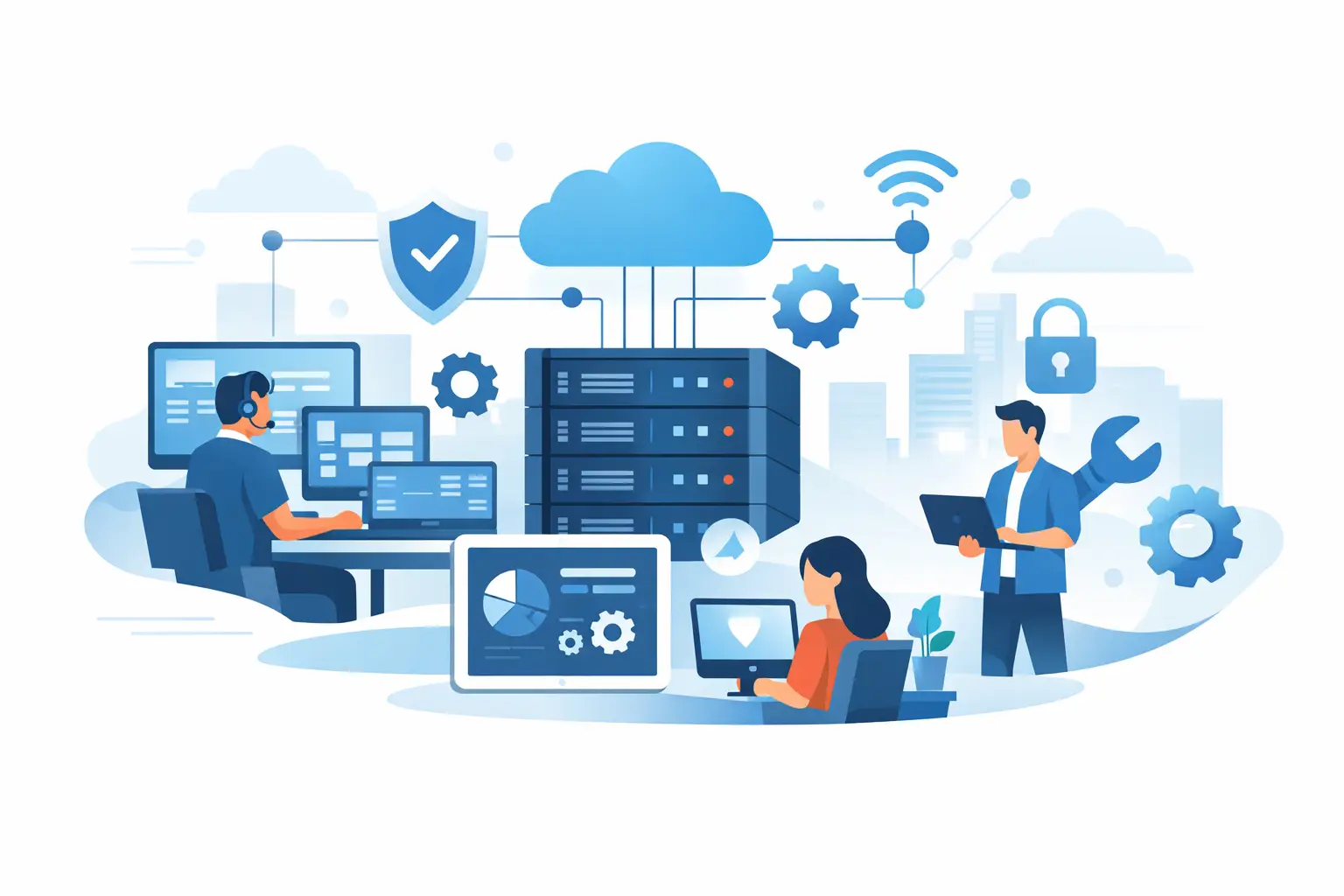
Managed IT services is a recurring service relationship in which a third-party provider takes responsibility for defined parts of your technology environment. That usually includes 24/7 monitoring, helpdesk support, patching, maintenance, endpoint security, backup oversight, and administration of core platforms such as Microsoft 365.
The key difference is not just who does the work. It is how the work is delivered. In a managed model, IT is handled proactively. Systems are watched continuously, alerts are reviewed, routine updates are applied on schedule, and support processes are standardized. The goal is to reduce interruptions and control risk, not just respond after damage is already done.
That structure matters because most business IT problems are not random. They build over time through missed patches, weak user controls, backup failures, ignored alerts, aging hardware, inconsistent permissions, or lack of visibility across sites and devices. Managed services are designed to catch and correct those issues early.
How managed IT services differs from break-fix support
Traditional break-fix support is reactive. Something fails, users cannot work, and then someone is called in to repair it. You pay for the incident, but the larger environment may still be unmanaged. That can leave recurring problems in place.
Managed IT services shift the focus from emergency repair to ongoing prevention. The provider is not only there when users submit tickets. They are also responsible for monitoring the environment, maintaining system health, applying updates, reviewing security conditions, and keeping core services operational.
For many organizations, this changes the economics of IT support. Break-fix may look cheaper on paper if you only compare monthly invoices. But if your business loses productivity during outages, struggles with recurring issues, or faces avoidable security incidents, the real cost is much higher. Managed services trade unpredictable disruption for a more controlled operating model.
That said, not every company needs the same level of coverage. A small office with simple infrastructure may need core support and patching. A multi-site business with compliance exposure, remote users, and cloud dependencies may need broader oversight that includes security operations, incident response, and backup testing. The right service level depends on operational risk, not just company size.
What managed IT services usually includes
Most managed IT service agreements center on a core set of operational responsibilities. Continuous monitoring is one of the most important. Servers, workstations, network equipment, and business-critical services are watched for signs of failure, performance issues, and security concerns. When alerts appear, they are reviewed and addressed before they escalate.
Helpdesk and remote support are also standard. Users need password resets, software troubleshooting, device setup, printer support, and answers when something stops working. A managed provider gives your team a defined support channel and an expected response process, which improves both speed and accountability.
Patching and maintenance are another major component. Operating systems, business applications, firmware, and security tools all need regular updates. When patching is inconsistent, vulnerabilities remain open and stability suffers. Managed services put that work on a schedule and document it as part of normal operations.
Security is now inseparable from IT management. Endpoint protection, antivirus or advanced security tooling, user policy enforcement, and response to suspicious activity are often part of the service. In more mature environments, that can extend to managed detection and response, Security Operations Center support, and compliance-driven controls.
Backup and disaster recovery are also critical. Many businesses believe they have backups because software is installed, but they do not know whether backups are completing successfully or whether recovery will work under pressure. Managed oversight brings verification, issue resolution, and a clearer recovery plan.
Microsoft 365 management is another common inclusion because email, file sharing, identity, licensing, and collaboration now sit at the center of daily operations. Managing users, permissions, security settings, and platform changes is ongoing work. In a managed model, that work is handled systematically instead of only when a problem appears.
Why businesses choose managed IT services
The main reason is operational control. Businesses that depend on technology need consistency. They cannot afford to guess whether backups ran, whether devices are patched, whether a departing employee still has access, or whether alerts are being ignored overnight.
Managed IT services create a defined operating framework. Roles are clearer, support channels are established, routine tasks are not skipped, and the environment is reviewed continuously. For leadership teams, that means fewer surprises. For internal administrators, it means less time spent chasing basic support issues and more time available for business priorities.
Security is another major driver. Many companies have added cloud apps, remote workers, and mobile endpoints faster than they have added oversight. That creates gaps across identity, access, device management, and incident response. A managed provider helps close those gaps by treating security as part of ongoing operations rather than a one-time project.
Cost predictability also matters. With managed services, businesses generally move from variable emergency spending to a recurring service model. That does not eliminate every project or hardware cost, but it makes day-to-day support and oversight more predictable.
What a good managed IT provider actually does
A strong provider does more than answer tickets. They take ownership of infrastructure health and provide clear visibility into what is being monitored, maintained, and escalated. They should be able to explain what is covered, how incidents are handled, what security controls are in place, and where your risks still exist.
That last point matters. No provider can promise that no outage or security event will ever happen. Good managed IT is about lowering risk, improving readiness, and responding quickly when something does go wrong. If a provider speaks only in guarantees and never discusses limitations, that is a warning sign.
You should also expect process discipline. That includes documented onboarding, asset visibility, patching schedules, backup review, support procedures, and defined responsibilities between your team and theirs. Without structure, managed services can become just another version of reactive support with a monthly invoice attached.
For businesses that want one accountable partner across support, infrastructure, Microsoft 365, backup, and security oversight, providers such as One Source Datacom are often brought in to centralize those responsibilities under one service umbrella.
Is managed IT services right for every business?
Not always in the same form. Some larger companies already have internal IT staff and use managed services to extend coverage, add after-hours monitoring, or strengthen security operations. In that case, the provider complements the internal team rather than replacing it.
Smaller and mid-sized businesses often use managed IT services as their primary IT function. That works well when the company needs dependable support but does not want the cost and complexity of building a full internal team.
The model is especially valuable when uptime matters, user issues need fast resolution, and there is little tolerance for unmanaged risk. If your business runs on connected systems all day, across multiple users or locations, the question is usually not whether management is needed. It is whether that management is formalized and accountable.
The real value behind managed IT services
The value is not just technical support. It is fewer preventable problems, stronger security habits, clearer responsibility, and a more stable operating environment for the business.
When IT is unmanaged, leaders often feel that something is off but cannot pinpoint it. Tickets keep appearing. Updates are inconsistent. Security concerns are handled piecemeal. Vendors point fingers. Internal staff carry too much informal responsibility. Managed IT services address that by putting systems, support, and oversight into a defined service model.
If you are evaluating your current environment, the right question is not simply what is managed IT services. The better question is whether your business has a consistent way to keep systems monitored, users supported, risks reduced, and operations moving without constant disruption. If the answer is no, a managed approach is usually the next practical step.